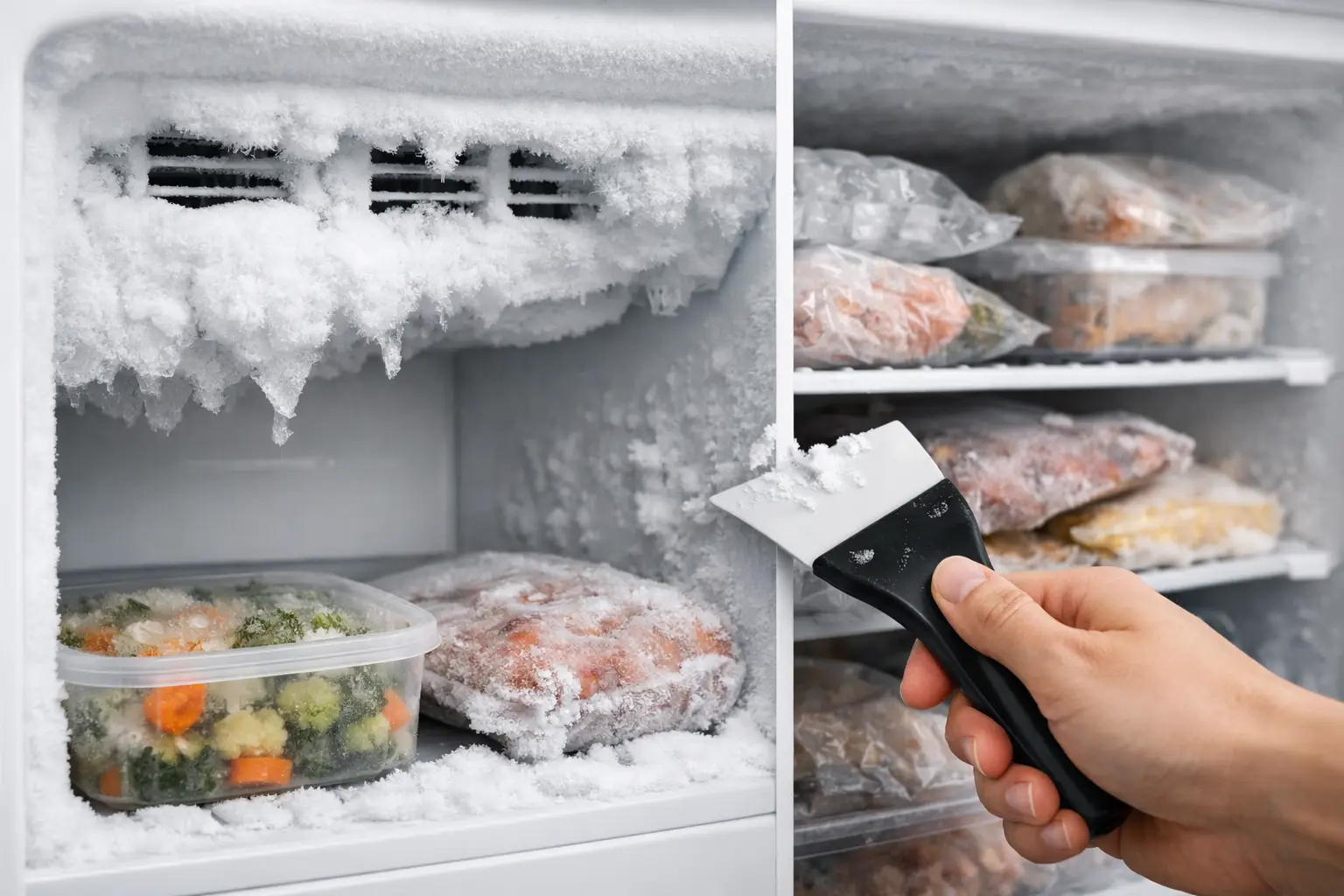
A thin layer of frost can be normal in a manual-defrost freezer. Thick snow-like ice on shelves, food packages, walls, or the back panel is different. The most common freezer frost buildup causes come down to warm, humid air getting inside or a frost-free system that is no longer clearing ice as designed. Catching the pattern early can protect food, reduce energy use, and help you avoid a freezer that stops cooling when you need it most.
Ice building up inside your freezer? Run the free guided fridge/freezer diagnosis — it screens for safety first, then walks you through likely causes (door seal, defrost system, airflow) and tells you honestly when to call a pro. Start the freezer diagnosis →
Why frost forms inside a freezer
Freezers work by pulling heat out of the cabinet. Every time warm household air enters, it carries moisture. That moisture condenses on cold surfaces and freezes. A brief door opening may leave a light dusting of frost, but frequent moisture entering the compartment can build into a serious layer of ice.
In a manual-defrost model, some frost accumulation is expected over time. In a frost-free refrigerator freezer, the appliance should periodically melt frost from the evaporator coils and drain that water away. When that process fails, frost can take over the rear interior panel, restrict airflow, and eventually make the freezer and refrigerator sections run too warm.
The most common freezer frost buildup causes
A door that does not seal tightly
A worn, dirty, warped, or torn door gasket is one of the most frequent causes of freezer frost. Even a small gap lets humid kitchen air enter around the clock. The compressor then works harder, and frost often appears along the door opening, on upper shelves, or around food near the front of the freezer.
Start by looking closely at the rubber gasket for cracks, hardened areas, food residue, or spots that have pulled away from the door. Clean it gently with warm, soapy water and dry it thoroughly. Also check whether a package, ice bin, or shelf is keeping the door from closing fully.
A simple paper test can help. Close the door on a strip of paper and pull it out. If it slides out with almost no resistance in several places, the seal may be weak. A gasket replacement or door adjustment is often a worthwhile repair when the rest of the freezer is in good condition.
The door is being opened too often or left ajar
A door that is left slightly open for even a few hours can create a surprising amount of frost. This is common when a large package shifts forward, a drawer is not fully seated, or the freezer is packed so tightly that the door bounces back open.
Frequent opening also matters, especially in humid weather. Try to decide what you need before opening the door, close it firmly, and make sure children can reach commonly used items without searching through the compartment. If frost returns quickly after you have defrosted the unit, pay close attention to how the door closes during normal use.
Hot or uncovered food adds moisture
Placing steaming leftovers, uncovered foods, or loosely wrapped items in the freezer adds moisture directly to the air inside. As that moisture freezes, it may appear on food packages and interior surfaces. It can also cause freezer burn, which dries out food and affects flavor and texture.
Let hot food cool briefly before freezing it, but do not leave perishable food at room temperature for too long. Use airtight containers or freezer-grade bags, and press excess air from bags before sealing. This will not fix a failed appliance part, but it can greatly reduce ordinary frost caused by moisture.
A failed automatic defrost system
If you own a frost-free freezer and see a thick, even sheet of ice behind the rear inside panel, the automatic defrost system may be the problem. This system usually includes a defrost heater, a temperature sensor or defrost thermostat, and an electronic control board or timer. These components work together to melt frost off the evaporator coils at scheduled intervals.
When one part fails, frost stays on the coils instead of melting away. Air can no longer move properly through the freezer, so you may notice weak cooling, a refrigerator section that feels warmer than usual, or a fan that becomes loud as it hits ice. A full manual defrost may restore cooling temporarily, but the frost usually returns if the faulty component is not repaired.
This is a good point to call for appliance repair help. Diagnosing defrost components requires electrical testing and access to parts behind interior panels. A certified technician can identify the failed part rather than replacing several components based on guesswork.
Blocked vents or poor airflow
Cold air needs a clear path through the freezer. Packing food tightly against vents can trap cold air in one area while other sections warm up. That uneven temperature can encourage frost, make ice cream soft, and leave some packages only partly frozen.
Check the back and side walls for air vents, then move packages a few inches away. Avoid lining shelves with cardboard or thick materials that interfere with circulation. A reasonably full freezer runs efficiently, but an overloaded freezer that blocks vents can create more trouble than it prevents.
Temperature settings that are too low or unstable
For most homes, a freezer temperature of 0 degrees Fahrenheit is the target. Setting the control much colder does not preserve food better, but it can make moisture freeze more aggressively and may increase energy use. On the other hand, temperatures that rise and fall because of a failing thermostat, sensor, control board, or compressor issue can lead to excess frost and inconsistent food storage.
Use a freezer thermometer rather than relying only on the control dial or display. If the temperature cannot stay near 0 degrees Fahrenheit, or if the appliance seems to run constantly, there may be more happening than a simple door-seal issue.
A clogged or frozen defrost drain
During an automatic defrost cycle, melted frost should flow through a drain into a pan beneath the appliance. If that drain becomes blocked with debris or freezes shut, water can refreeze inside the freezer. You may see a solid ice layer on the bottom, water under drawers, or ice around the rear panel.
Some homeowners can clear a visible, accessible drain after unplugging the appliance and removing food. However, forcing sharp objects into a drain opening can damage components or puncture a liner. If the drain repeatedly freezes or water keeps returning, professional service is the safer route.
Not sure whether it’s a door seal or the defrost system? The guided diagnosis helps you narrow it down one safe step at a time. Run the freezer diagnosis →
What you can safely do before scheduling repair
If the freezer is still holding food at a safe temperature, begin with the basics. Make sure the door closes fully, clean the gasket, move items away from vents, and set the temperature near 0 degrees Fahrenheit. Check that the appliance is level enough for the door to close properly and that nothing is interfering with the hinges.
For a manual-defrost freezer, plan a complete defrost when frost reaches about one-quarter inch thick. Move food to a cooler or another freezer, unplug the unit, and let the ice melt naturally with towels placed underneath. Never chip ice with a knife, screwdriver, or other sharp tool. It is easy to puncture a refrigerant line or interior wall, turning a manageable maintenance task into a much larger repair.
A frost-free freezer with heavy frost may also need to be manually defrosted to get cooling back temporarily. Still, treat that as a diagnostic clue, not a permanent fix. If the frost returns within days or weeks, a defrost-system problem is likely.
If frost keeps returning even after the DIY checks, run the guided diagnosis — it will also flag when a technician is the right call. Start the free freezer check →
When freezer frost means you need a technician
Schedule service promptly if frost keeps coming back after a full defrost, the back panel is iced over, food is softening, the refrigerator section is warming up, or you hear a fan scraping against ice. Water leaking from the freezer or a door that will not stay shut also deserves attention before the problem spreads.
Repair costs depend on the appliance type, the failed part, local labor rates, and whether a gasket, fan, heater, sensor, control board, or sealed-system component is involved. A technician can help you compare the likely repair against the age and overall condition of the appliance. For homeowners who need fast, dependable local assistance, US Appliance Repairs can help connect you with an independent appliance repair provider.
Frost is often the freezer’s early warning sign. Address a weak door seal or blocked vent now, and seek qualified repair help when the ice points to a failed defrost system. That quick response can keep your food protected and get your freezer back up and running with less household stress. To decide what to do next, see our freezer repair costs and refrigerator warm but freezer cold guides.