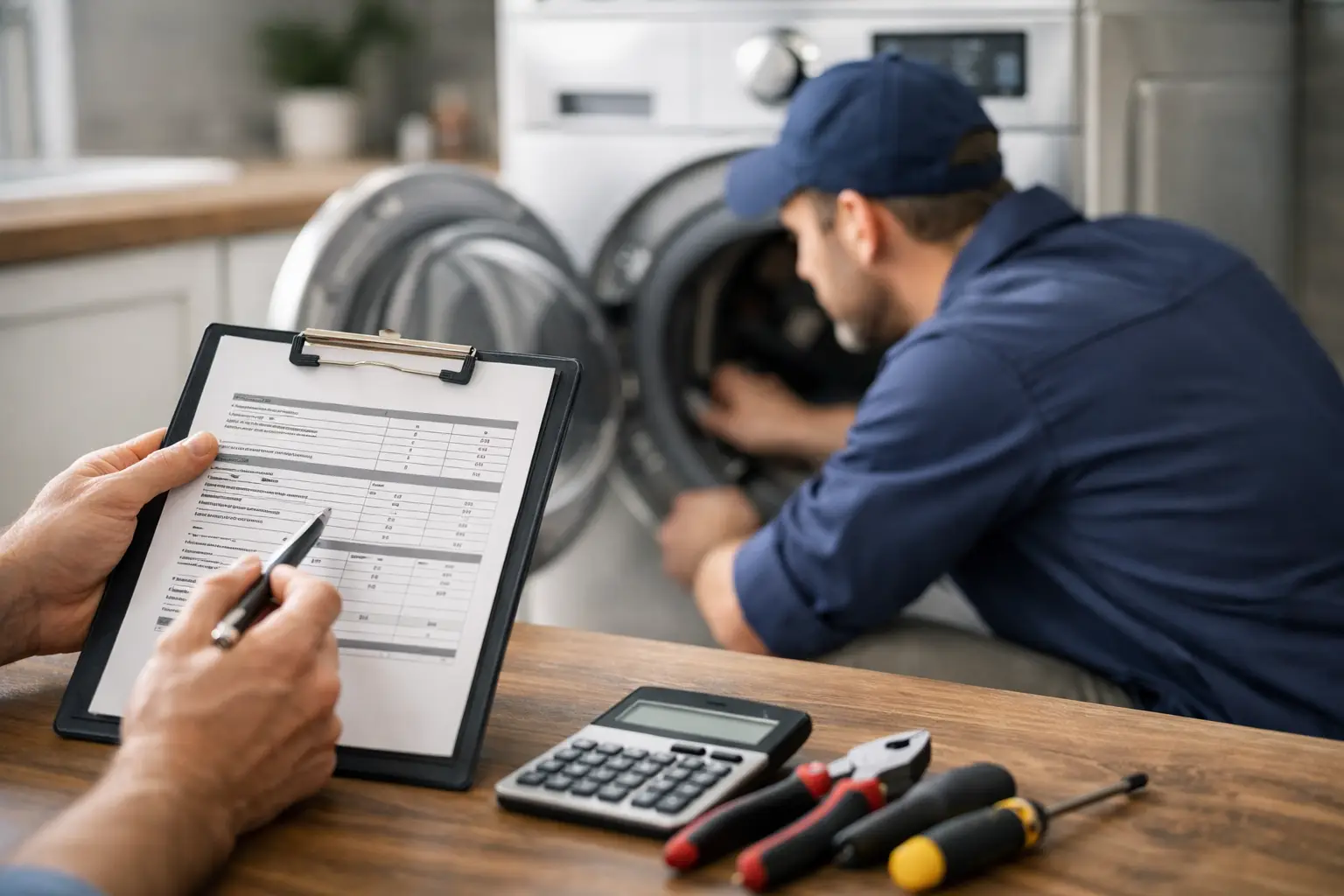
A refrigerator that is warm, a dryer that will not heat, or a dishwasher that leaves water in the tub can quickly turn into a household emergency. Before approving work, an appliance repair estimate gives you a clearer picture of the likely cost, the problem being addressed, and whether repairing the unit makes financial sense.
A good estimate is more than a single dollar figure. It should help you understand what you are paying for, what may change after testing, and what questions to ask before a technician begins the repair. That clarity matters when you need fast help but still want to make a confident decision.
Not Sure You Need a Repair?
Before you pay for a service call, try FixDecision AI. Describe what's wrong with your appliance and get a safety-first assessment to help you decide whether to DIY or call a professional.
What an appliance repair estimate should include
Repair pricing can vary by appliance type, brand, location, labor availability, and the part required. Still, a professional estimate should break the expected charge into understandable pieces instead of leaving you to guess.
Most estimates include a diagnostic or service-call fee, labor, replacement parts, and any applicable taxes or additional service charges. The diagnostic fee pays for the technician’s time to inspect the appliance, test components, and identify the cause of the failure. In some cases, that fee may be applied toward the completed repair. Ask before scheduling so you know how the provider handles it.
The labor portion reflects the time and skill needed to complete the repair. Replacing an accessible dishwasher drain hose is very different from disassembling a front-load washer to replace a failed bearing. Complex work, built-in appliances, stacked laundry units, and difficult-to-access components can require more labor.
Parts should be identified as specifically as practical. A written estimate may list an item such as a control board, water inlet valve, igniter, door gasket, compressor relay, or heating element. If a part is expensive, ask whether it is an original manufacturer part, an aftermarket equivalent, or a remanufactured part. Each option can affect price, availability, and warranty coverage.
Why the first number may not be the final number
Homeowners often want an exact price before a technician arrives. That is understandable, especially when an appliance stops working without warning. But a reliable price cannot always be confirmed from symptoms alone.
For example, a refrigerator that is not cooling may have a dirty condenser area, a failed fan motor, a start relay problem, a control issue, or a sealed-system failure. Those repairs have very different costs. Likewise, a dryer that will not heat could have a damaged heating element, a failed thermal fuse, a faulty igniter, or a power-supply issue.
A technician may be able to provide a preliminary range before the visit based on the appliance model and reported symptoms. The firm appliance repair estimate generally comes after diagnosis. That is not necessarily a red flag. It is often the difference between a responsible assessment and an unreliable guess.
Ask whether the estimate is a fixed repair price once approved or whether labor and parts are billed separately. Also ask what happens if testing reveals an additional failed component. A dependable service provider should explain the change and get approval before performing work beyond the original scope.
The cost factors that change repair pricing
No two repair calls are exactly alike, but a few variables regularly shape the estimate. Understanding them helps you compare quotes fairly rather than choosing based only on the lowest initial number.
The appliance itself is the first factor. A basic top-load washer may have widely available parts and relatively straightforward access. A high-end refrigerator with electronic controls, multiple cooling zones, an ice maker, and a water dispenser may require more advanced diagnosis and costlier components.
Age and condition matter too. A newer appliance can sometimes justify a higher repair cost because it may have many useful years left. An older unit may need a part that is discontinued, backordered, or expensive compared with the appliance’s remaining value. Previous repairs, rust, leaks, electrical damage, and poor maintenance can also affect what is practical.
Urgency can influence availability and scheduling. A refrigerator failure with food at risk may require same-day attention, while a microwave with a cosmetic door-handle issue may be able to wait for a routine appointment. In some markets, after-hours, weekend, or emergency service can carry additional charges.
How to compare repair estimates without missing the details
Getting more than one estimate can be useful for a major repair, particularly when the appliance is older or the proposed repair involves a costly part. But compare like for like. One quote may include diagnosis, labor, parts, and a warranty, while another may only mention the part price.
When reviewing estimates, focus on these practical questions:
- What problem did the technician diagnose, and what testing supports that diagnosis?
- Does the price include the service-call fee, labor, parts, taxes, and any return visit?
- Is the part new, original manufacturer equipment, aftermarket, or remanufactured?
- How long is the repair expected to take, and is the part currently available?
- What warranty applies to the part and the labor?
The lowest quote is not always the best value if it leaves out labor, uses an unknown part source, or provides little explanation of the repair. On the other hand, the highest quote is not automatically better either. Ask for a plain-language explanation of the diagnosis and pricing. You should know what you are authorizing before the work begins.
When repair is worth it and when replacement may be smarter
A repair estimate is also a decision tool. If the repair restores a well-maintained appliance for a reasonable cost, fixing it can be the most economical choice. This is common with issues such as broken belts, faulty door switches, clogged drain pumps, damaged gaskets, heating elements, igniters, and inlet valves.
Replacement may make more sense when the repair is unusually expensive, the appliance has repeated breakdowns, or a major component has failed near the end of the unit’s expected service life. Compressors, sealed-system repairs, transmission problems, and major electronic control failures can sometimes push the decision toward replacement, especially on older appliances.
There is no universal percentage that works for every household. The right choice depends on the appliance’s age, condition, original quality, repair history, energy use, and replacement cost. A family with a built-in refrigerator may reasonably choose repair because replacement involves cabinetry and installation costs. A homeowner with an aging basic dryer may decide replacement is more practical after a major repair estimate.
Questions to ask before you approve the work
Do not feel pressured to approve a repair you do not understand. A qualified technician should be prepared to explain the issue in straightforward terms and tell you what the recommended repair is designed to fix.
Ask whether the appliance can be safely used while waiting for parts, especially if you are dealing with heat, gas, water, or electrical symptoms. A burning smell, sparking, a gas odor, repeated breaker trips, significant leaking, or smoke calls for immediate caution. Turn off the appliance when it is safe to do so and seek professional help promptly.
It also helps to ask for the model number to be included in the service record. This makes future maintenance, warranty questions, and parts research easier. Keep a copy of the estimate and final invoice, particularly if the repair includes a part warranty.
Getting dependable help for an appliance problem
Fast service should not mean unclear pricing. When you connect with a local repair provider through US Appliance Repairs, you can ask for diagnostic pricing, availability, and an explanation of the proposed work before making a decision. Independent local technicians perform the service, so terms, pricing, and warranties may vary by provider.
A clear estimate will not make a broken appliance any less inconvenient, but it can remove much of the uncertainty. Ask for the diagnosis, understand the full expected cost, and choose the repair option that gives your household the best path to getting back up and running.